Cacao is a fruit
Each pod holds seeds in sweet-tart white pulp. Chocolate begins only after those seeds are fermented and dried.
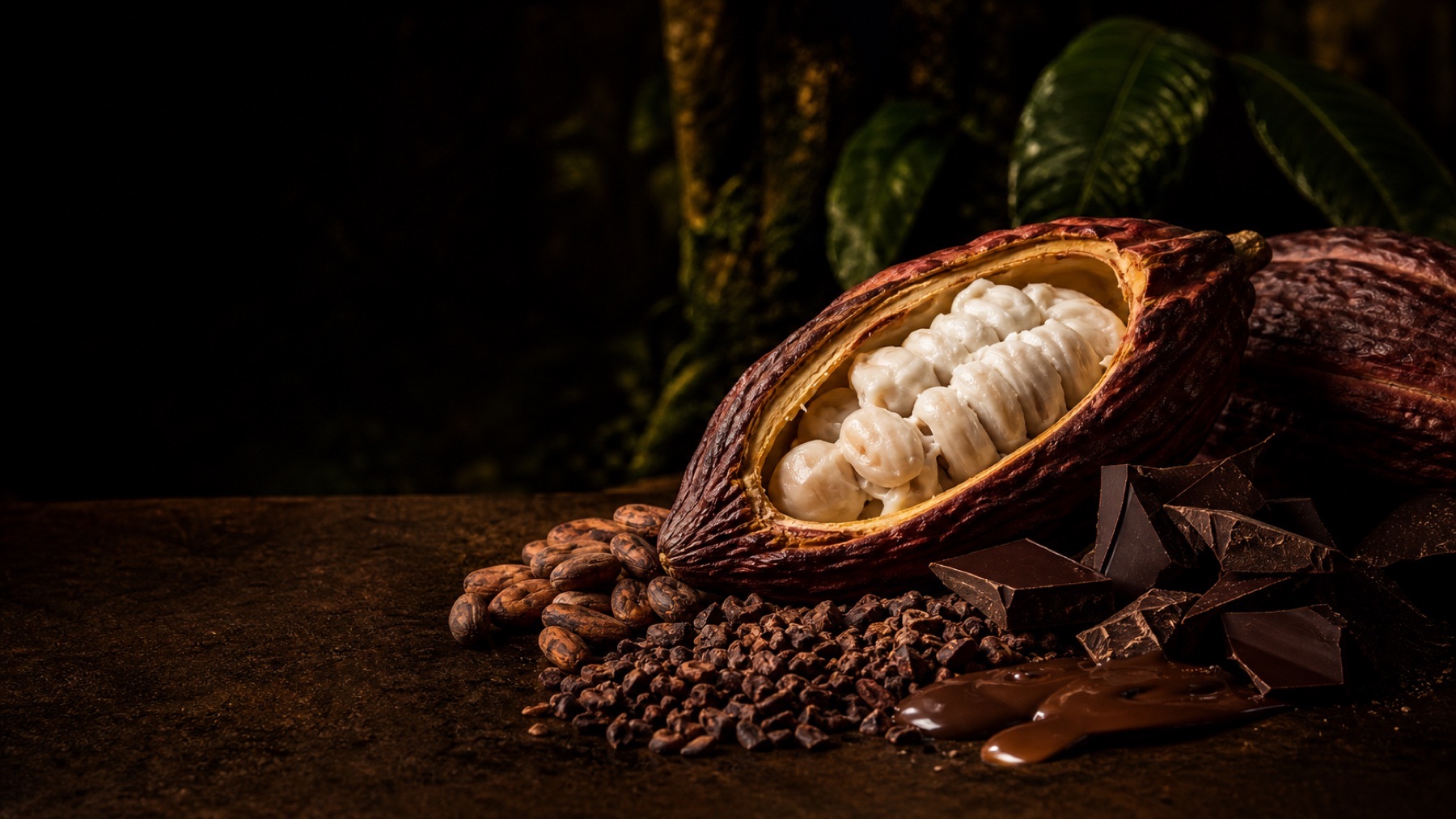
Trace cacao from tropical forests to the finest bars—geography, history, craft, flavor, and culture in one beautiful atlas.
The fruit behind the bar.
Theobroma cacao grows in a narrow tropical belt, yet its expression is almost limitless.
A bar of chocolate carries decisions from hundreds of hands: the tree variety, soil, harvest, fermentation, drying, roasting, conching, ingredients, and the maker’s philosophy.
The Atlas helps you see all of it.
Start here if you have five minutes. These are the distinctions that make labels, origin stories, tasting notes, and ethical claims easier to read.
Each pod holds seeds in sweet-tart white pulp. Chocolate begins only after those seeds are fermented and dried.
It combines cocoa mass and any added cocoa butter. It does not tell you bean quality, ethics, roast, or sweetness balance.
Microbes consume pulp sugars while heat and acids change the seed, creating aroma precursors that roasting can later develop.
Country is a useful coordinate, but genetics, farm ecology, post-harvest work, roast, and recipe can change the final profile.
Fine chocolate balances bitterness with acidity, aroma, sweetness, texture, and finish. More intense is not automatically better.
Price, certification, or beautiful packaging cannot prove farmer income, labor conditions, traceability, or forest protection on their own.
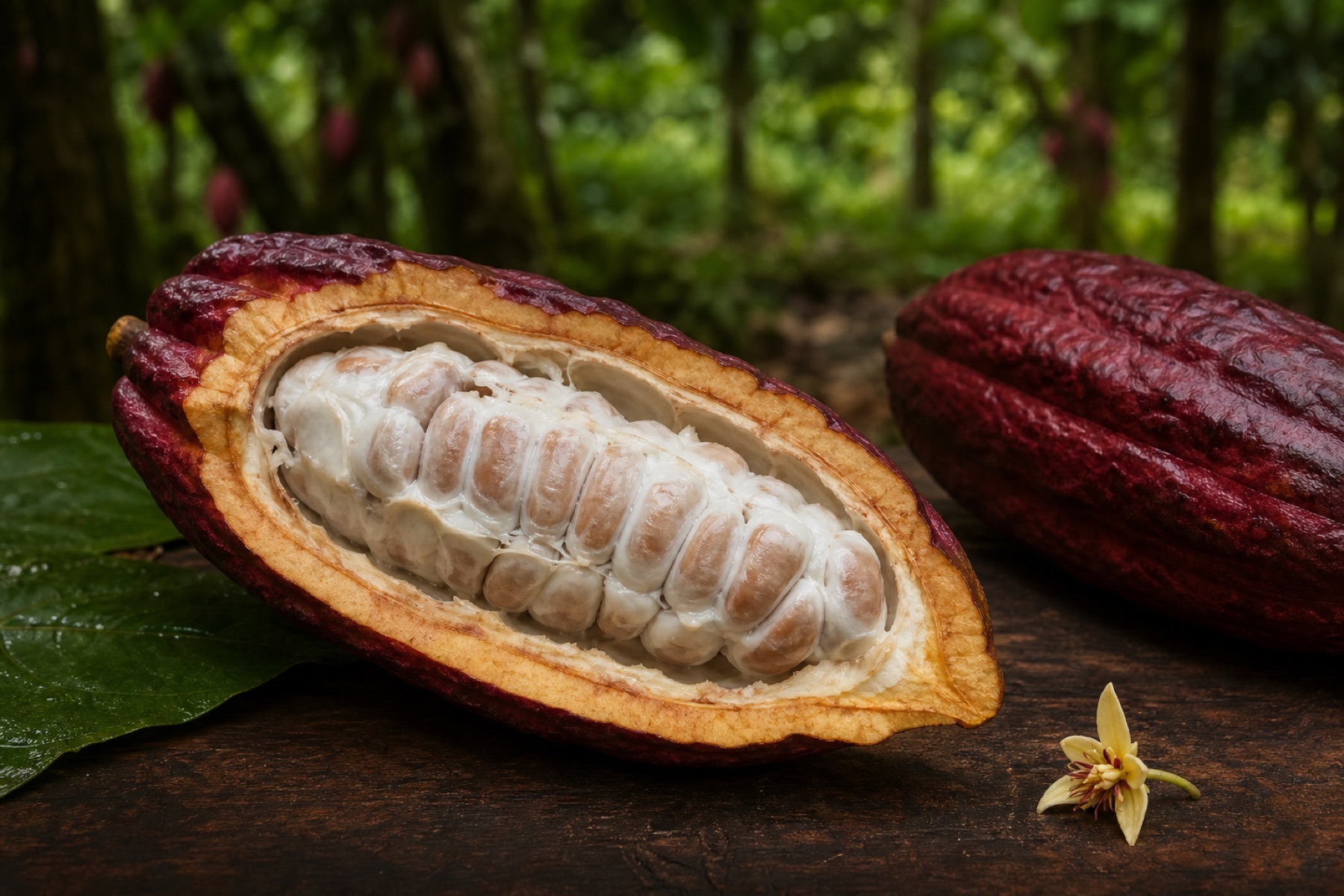
White mucilage feeds the fermentation ecosystem; the seeds become cocoa beans only through post-harvest work.
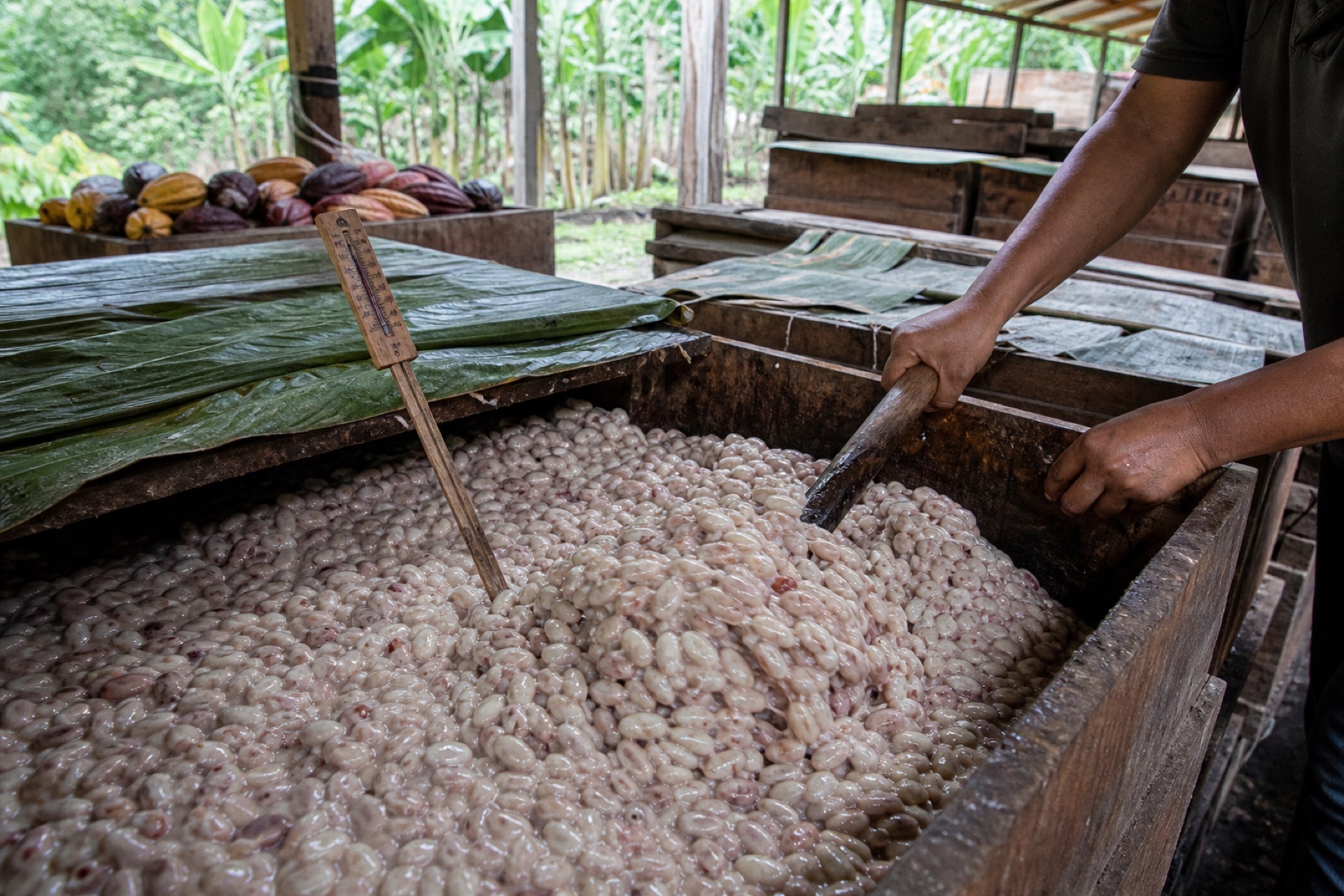
Yeasts, lactic-acid bacteria, and acetic-acid bacteria act in succession.
Fourteen decisions turn a bitter tropical seed into something glossy, aromatic, and capable of memory.
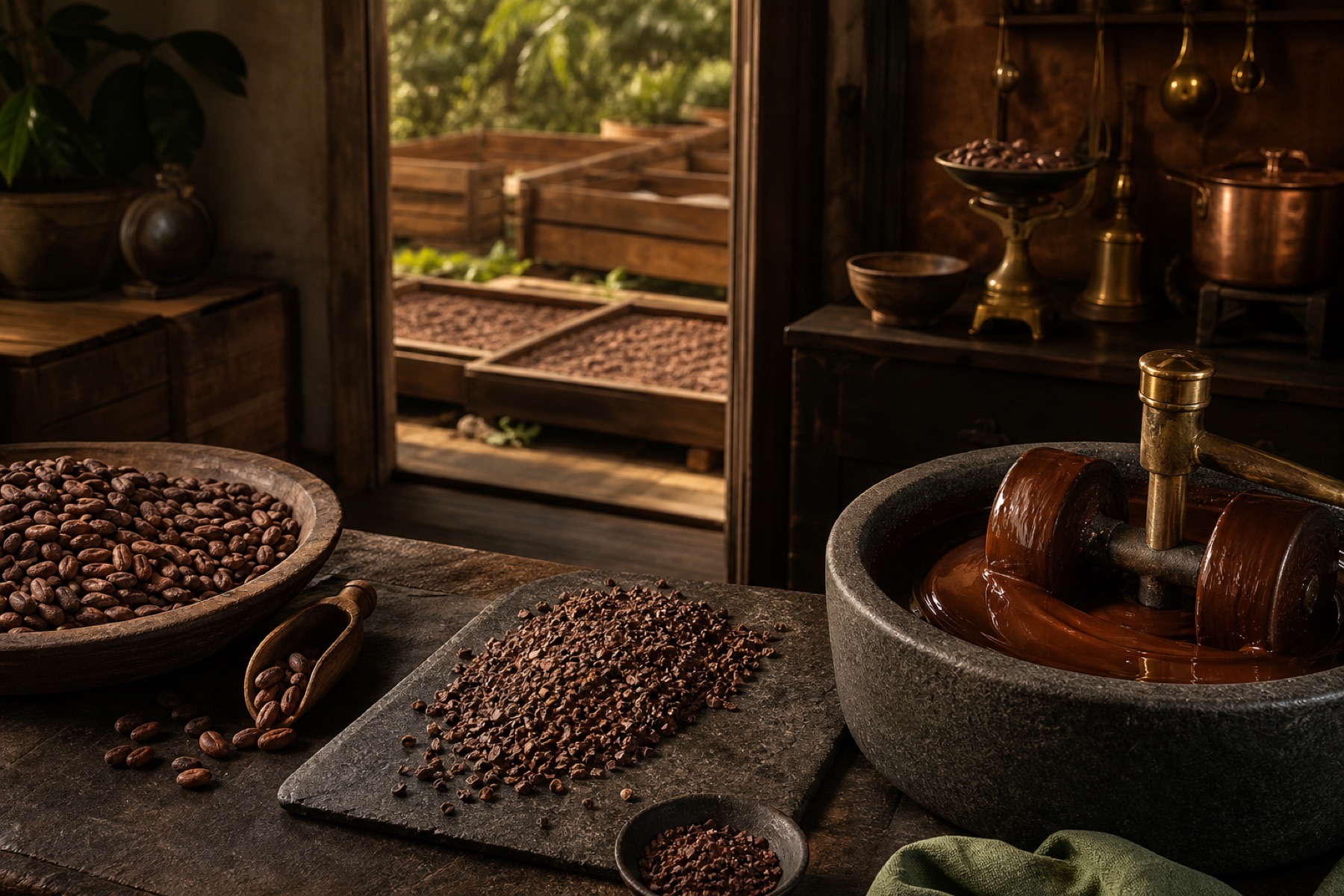
What happens, why it matters for flavor, common defects, and an expert note at every stage.
Open the process atlas ↗Farm observation, post-harvest judgment, workshop control and sensory attention are different forms of expertise. The Atlas keeps them visible instead of letting the finished wrapper take all the credit.
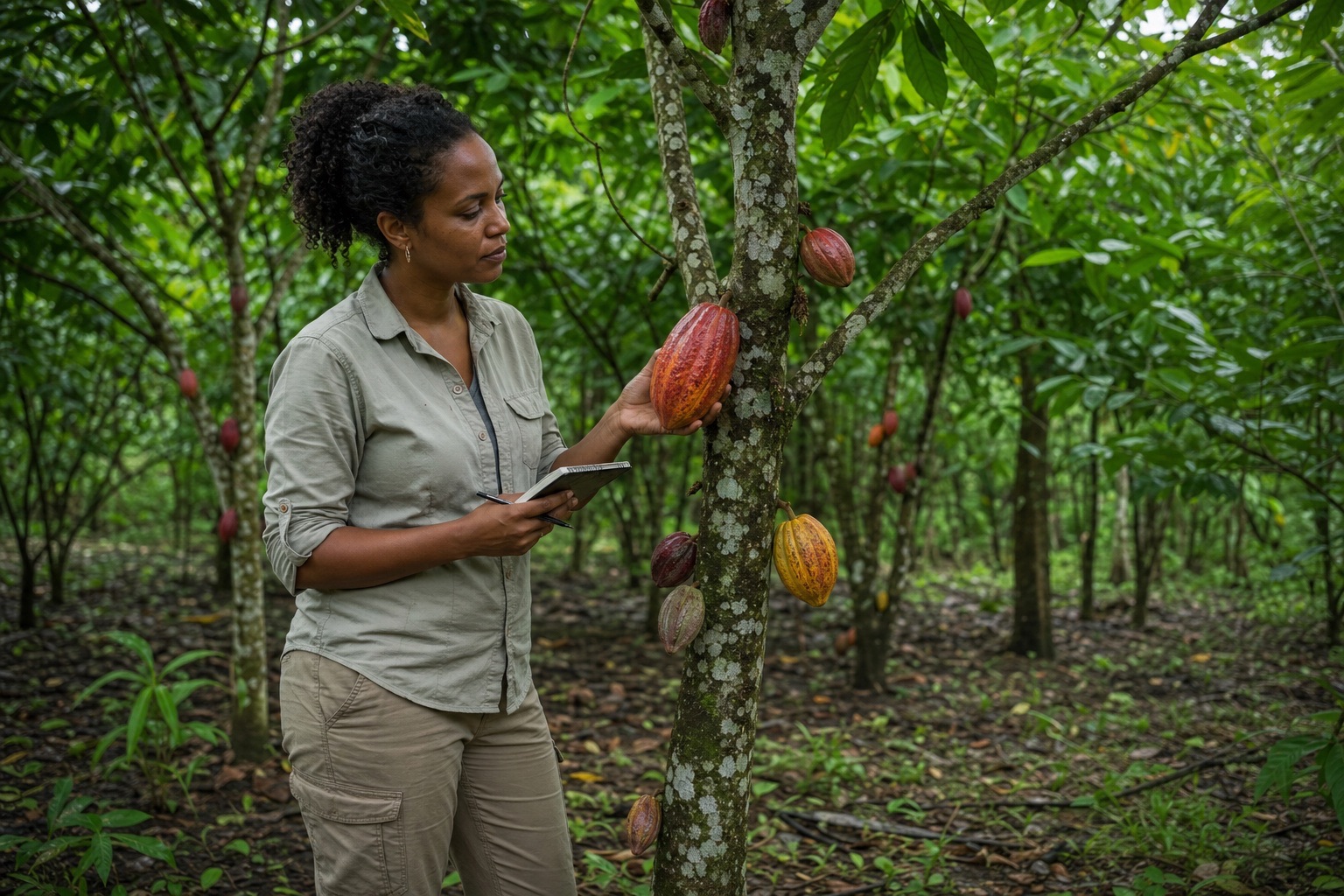
Origin begins with trees, weather, infrastructure, labor, decisions and incentives.
Study origin ↗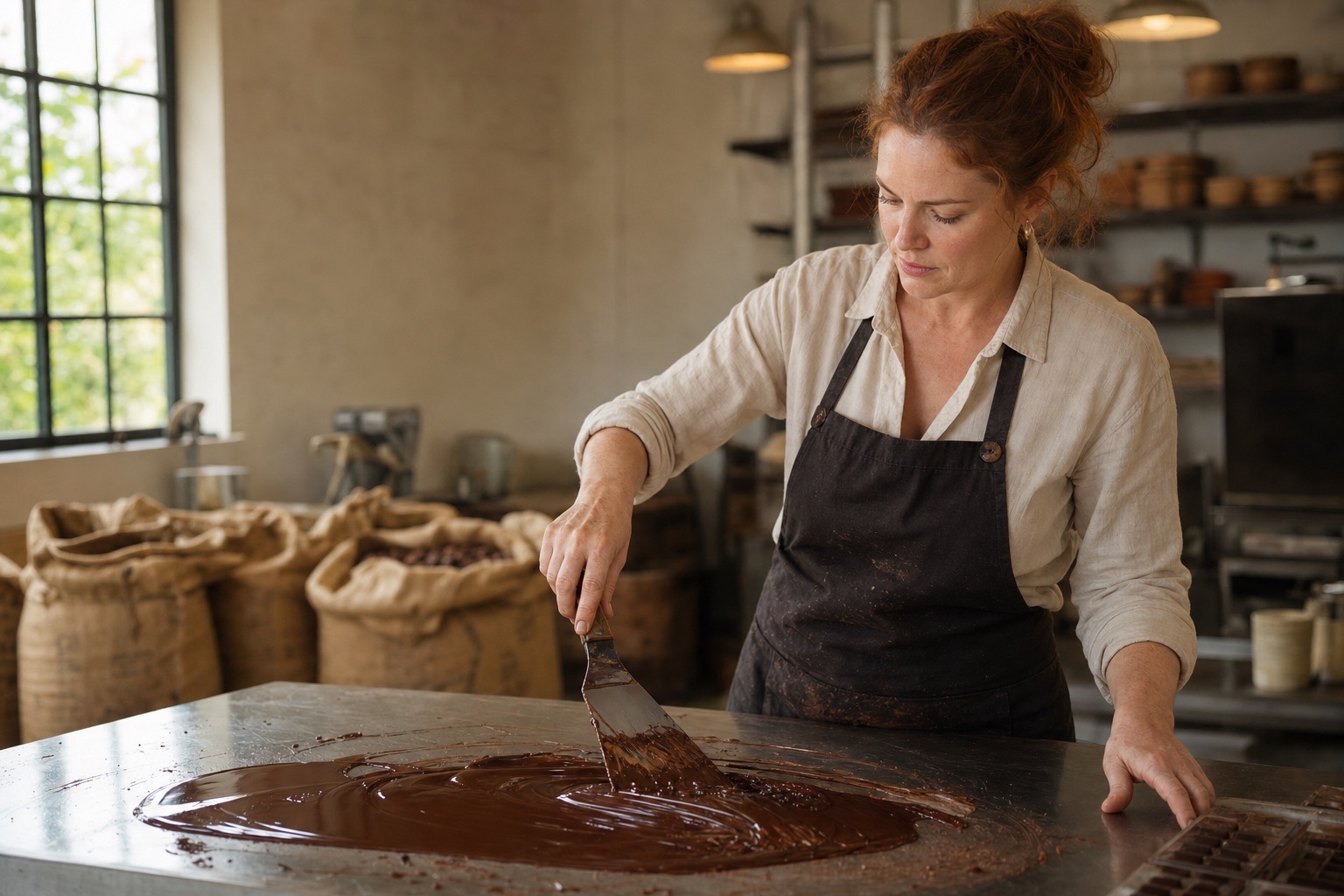
Roast, particle size, flow, volatile aroma and crystal structure solve different problems.
Study making ↗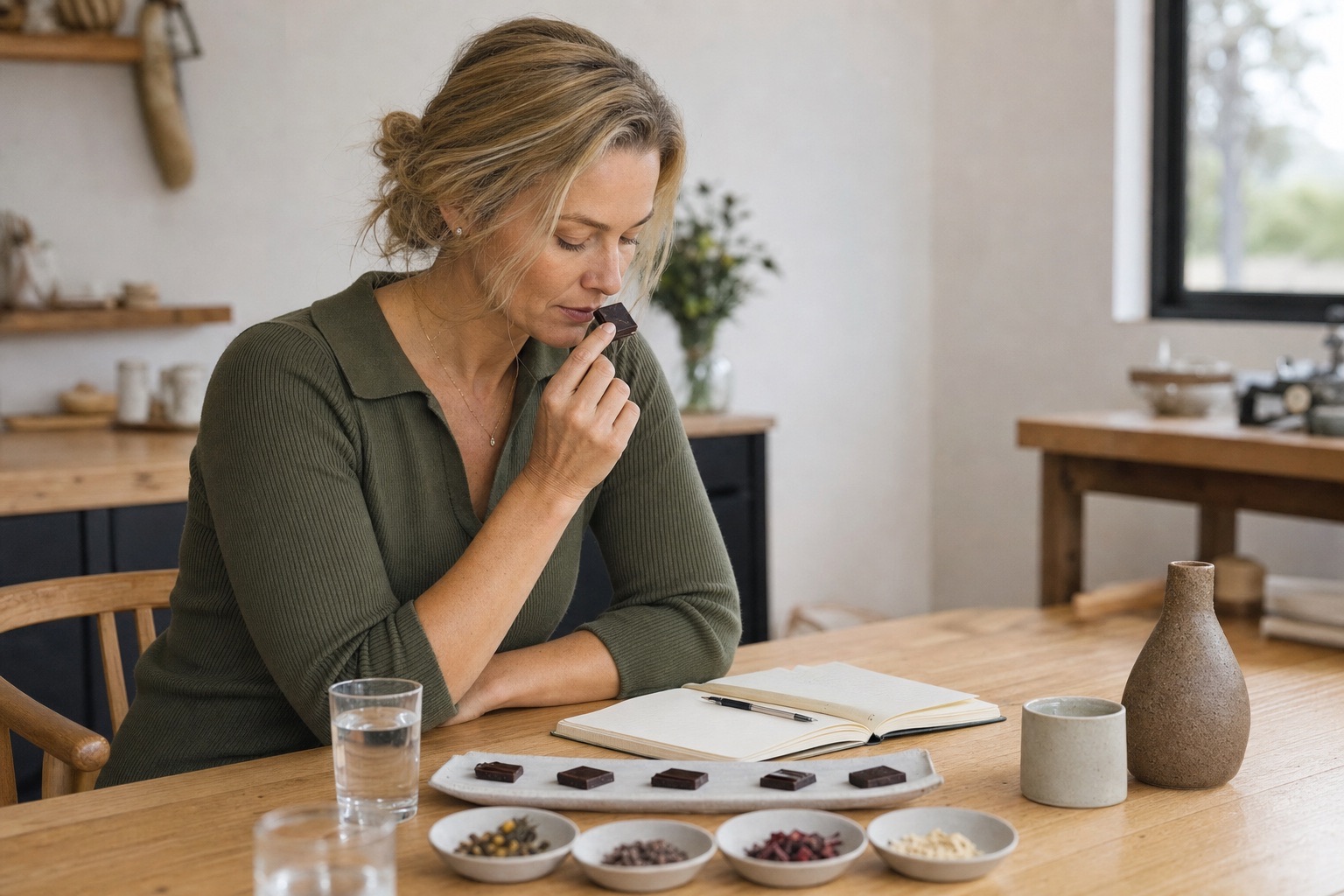
Comparison and careful notes reveal more than chasing somebody else’s flavor words.
Study tasting ↗Seven short stops. The vocabulary to read a label, taste with attention and ask better questions about every bar.